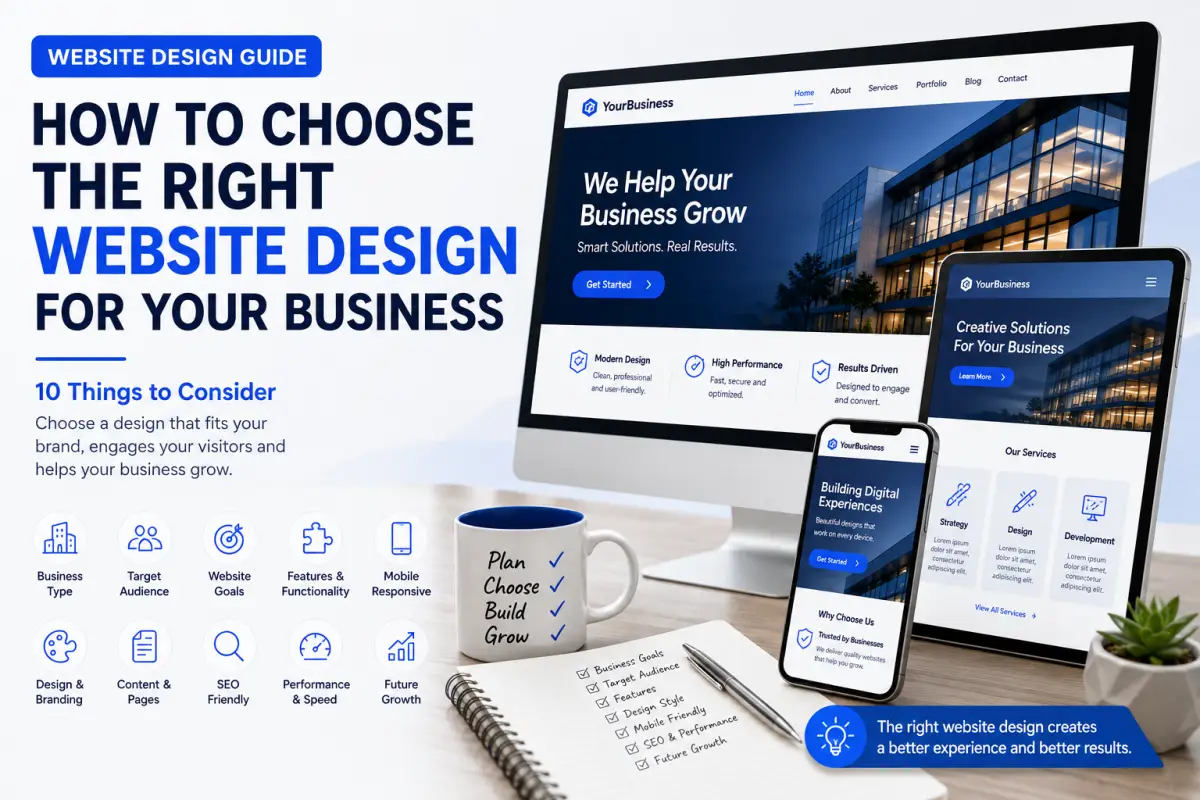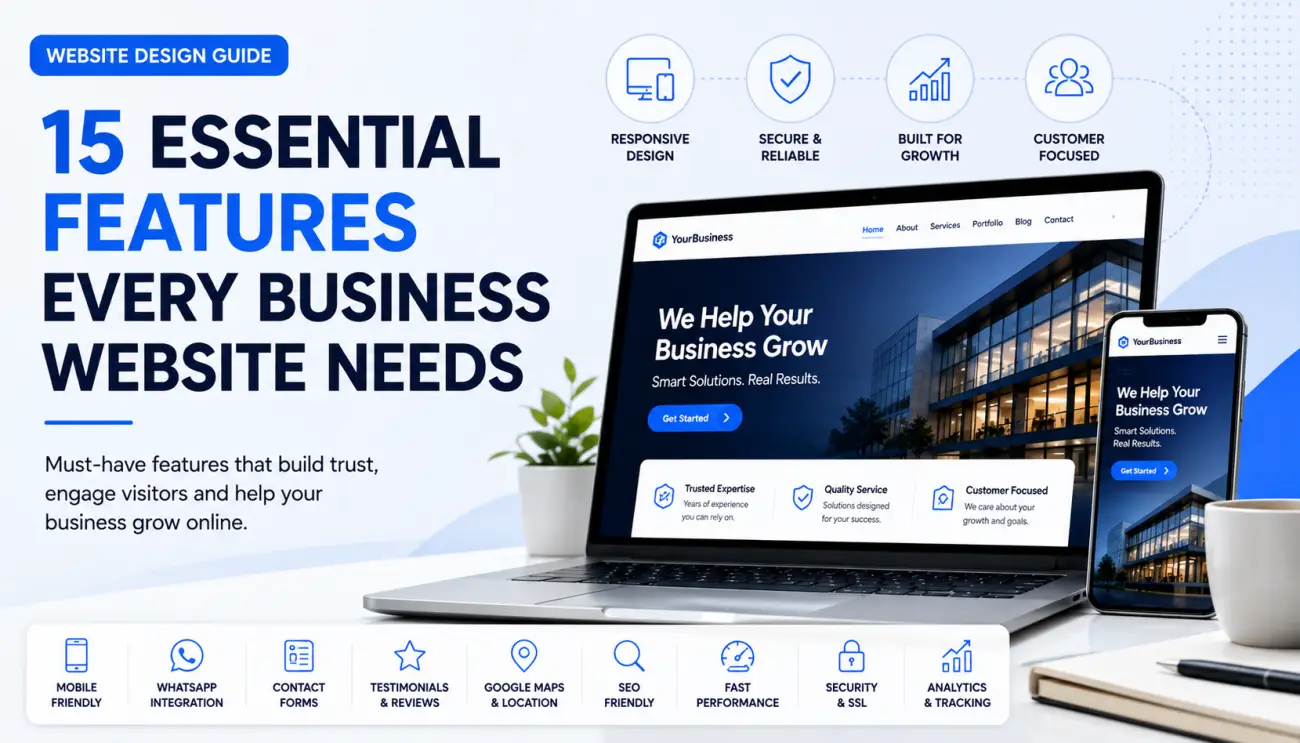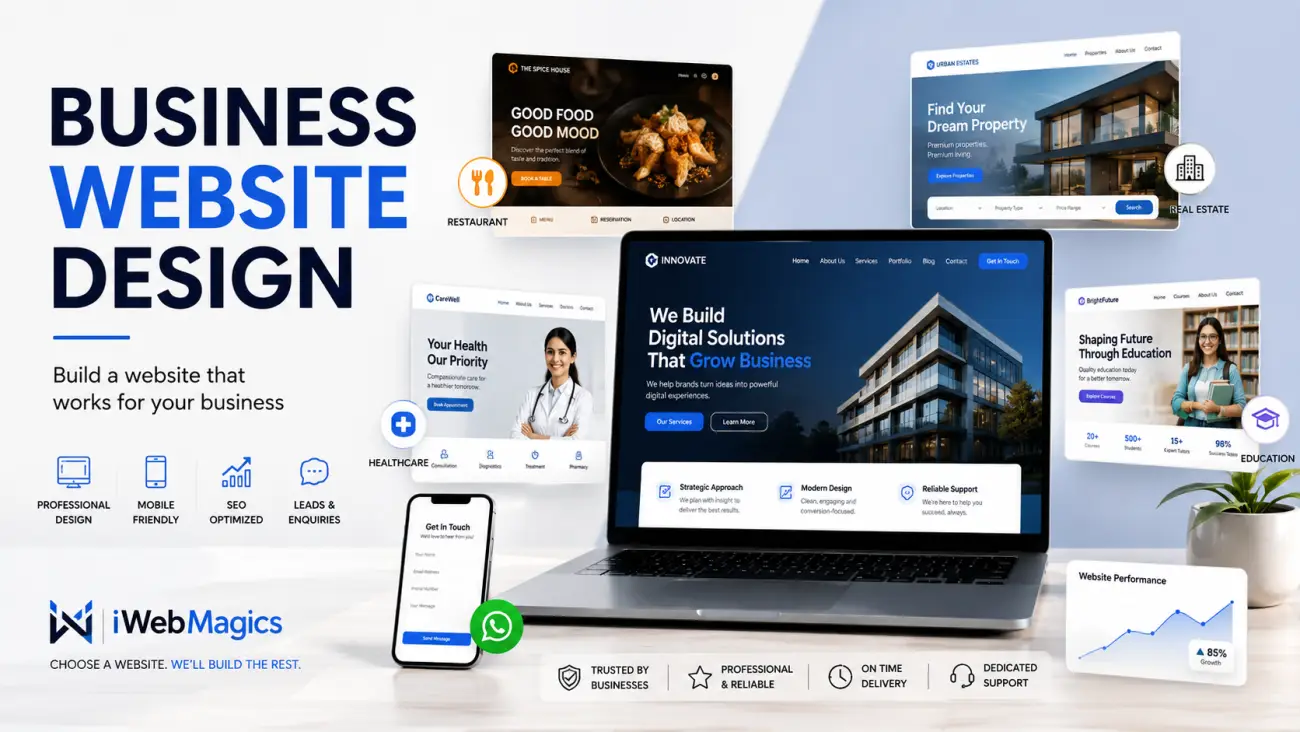

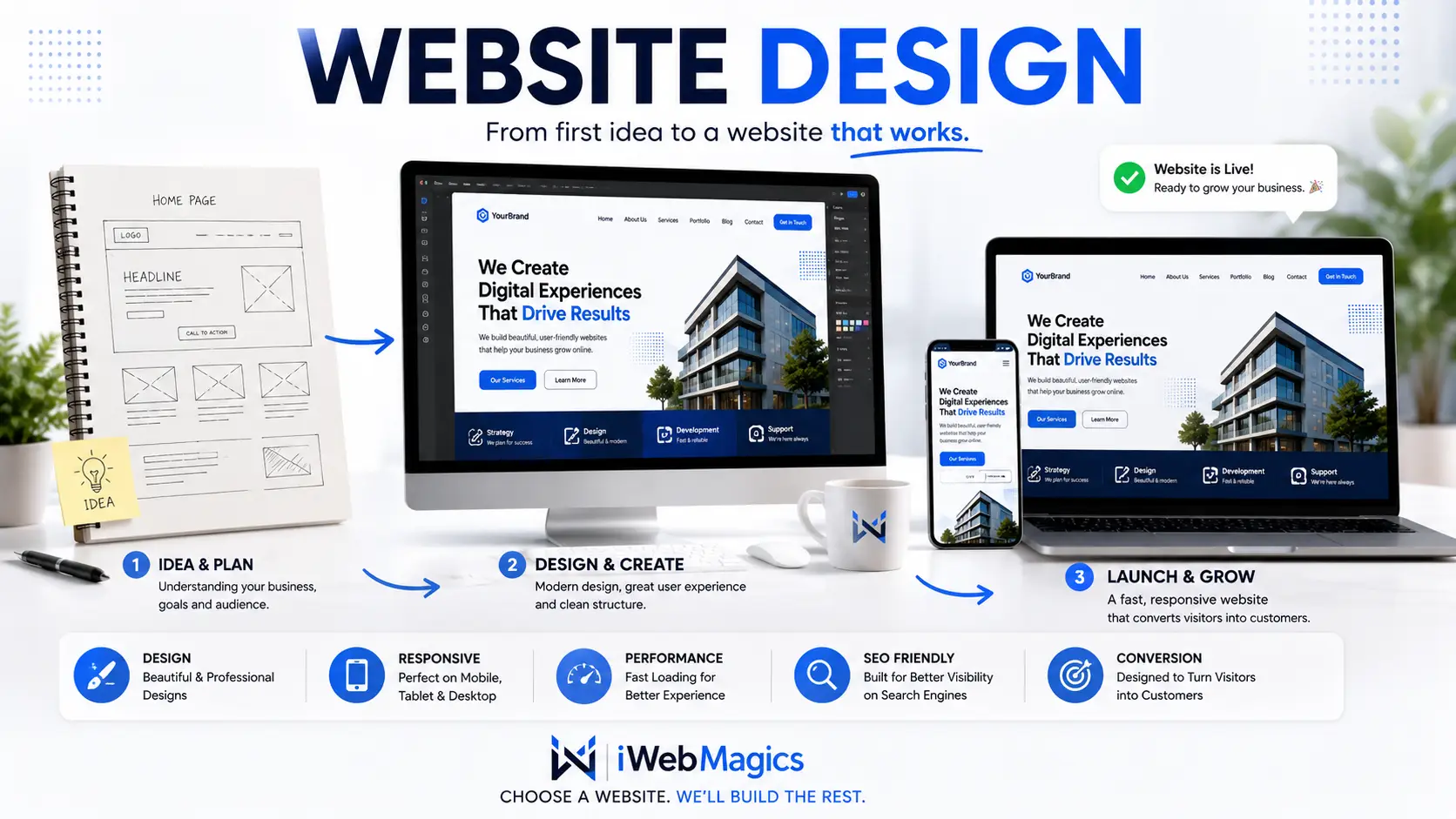
Website Design: The Complete Guide to Creating a Professional Website
A website is often the first interaction a potential customer has with your business. Within a few seconds, visitors are already forming an opinion. Is this business professional? Can I trust them?
And most importantly: Should I contact them?
That is why website design is about much more than making a website look attractive.
Good website design combines visual design, usability, content, mobile responsiveness, performance, SEO and conversion strategy to create an online experience that helps a business achieve its goals.
In this guide, we'll explain what website design is, what makes a website effective, the different types of website designs, the essential elements every website should have, common mistakes to avoid, and how to choose the right design for your business.
What Is Website Design?
Website design is the process of planning and creating the visual appearance, structure and user experience of a website.
It includes decisions about:
- Layout
- Colours
- Typography
- Images
- Navigation
- Page structure
- Content presentation
- Buttons and calls-to-action
- Mobile experience
- User experience
- Branding
But modern website design goes beyond visual appearance. A professionally designed website should help visitors understand the business, find information quickly and take action.
Think of your website as your digital storefront.
A website needs exactly the same principles in digital form.
Why Is Website Design Important?
You can have an excellent product or service, but if your website is confusing, outdated or difficult to use, potential customers may leave before they discover what you offer.
Good website design can help your business:
Create a strong first impression
Your website represents your business even when you're not available to speak with a customer.
Build trust
Professional design, clear information, testimonials and genuine business details can make visitors more comfortable contacting you.
Explain your offering
A well-structured website makes it easier for customers to understand your products and services.
Generate leads
Strategically placed calls-to-action can turn visitors into enquiries.
Improve user experience
Visitors should be able to find what they need without having to search through complicated menus or unnecessary pages.
Support SEO
A properly structured website makes it easier for search engines to understand your content and for users to discover relevant pages.
What Makes a Good Website Design?
A good website isn't simply one that looks beautiful. It should balance several different factors.
1. Visual Design
The website should look professional and consistent with the business's identity. This includes brand colours, typography, images, icons, spacing, page layouts, and visual hierarchy. The design should support the business rather than distract from it.
2. Clear Navigation
Visitors should be able to move around your website easily. A typical business website might include:
The exact structure depends on the business. The important thing is that visitors should quickly understand where to find the information they need.
3. Clear Website Content
Beautiful design cannot compensate for confusing content. Your website should clearly communicate what you offer, who it is for, why someone should choose you, and what they should do next.
4. Mobile-Friendly Design
Your website should work properly on smartphones, tablets, laptops, and desktop computers. Responsive design allows the layout and content to adapt to different screen sizes.
5. Fast Performance
Website visitors expect pages to load quickly. Large images, unnecessary animations, poorly optimized scripts and excessive plugins can negatively affect performance.
6. Strong Calls-to-Action
A website should guide visitors toward an appropriate next step, such as Get a Quote, Call Now, Chat on WhatsApp, Book an Appointment, Request a Demo, Buy Now, or Start Your Project.
The Essential Elements of a Professional Website
- Homepage: Introduces your business and directs visitors toward the most important information.
- About Page: Gives visitors more information about your business, team, experience and approach.
- Products or Services: Clearly explains what you sell, with dedicated pages for larger offerings.
- Portfolio or Projects: Showcases previous work as a strong trust-building element.
- Testimonials and Reviews: Reduces uncertainty by showing real customer experiences.
- Contact Page: Makes communication easy with phone, WhatsApp, email, contact forms, addresses, and maps.
- Frequently Asked Questions: Answers common queries and reduces friction before purchase.
Different Types of Website Design
- Business Website Design: Established to create professional online presence and generate enquiries.
- Ecommerce Website Design: Built for online selling with product catalogues, carts, and payment gateways.
- Portfolio Website Design: Focused on showcasing creative work for designers, photographers, and artists.
- Service Website Design: Structured around professional expertise like consultants and law firms.
- Landing Page Design: Single-objective pages focused on lead generation or specific offers.
- Educational Website Design: Designed for schools, coaching institutes, and training companies.
Website Design vs Website Development
These two terms are often used interchangeably, but they are distinct:
- Website Design: Focuses on appearance, layout, user experience, navigation, typography, and visual hierarchy.
- Website Development: Focuses on turning the design into a functioning website using HTML, CSS, JavaScript, WordPress, PHP, databases, and APIs.
Common Website Design Mistakes
- Designing only for desktop: Forgetting mobile optimization ruins mobile conversion.
- Too many animations: Excessive motion distracts visitors and slows down page loading.
- Too much information: Cluttering the page instead of prioritizing crucial details.
- Weak headlines: Using vague statements instead of clear value propositions.
- Hidden contact information: Forcing visitors to hunt for your phone number or enquiry form.
- Inconsistent branding: Mismatched colors and fonts across pages.
- Generic content: Relying on stock text instead of authentic expertise.
How We Approach Website Design at iWebMagics
- Step 1 — Choose a Design: Explore our collection of professionally designed website concepts.
- Step 2 — Share Your Details: Provide your logo, business information, content, images, and requirements.
- Step 3 — Customize: The selected design is adapted around your business and branding.
- Step 4 — Review: Review the website and provide your feedback.
- Step 5 — Launch: Once everything is ready, your website is prepared for launch.
Choose a website you like. We'll build the rest.
Frequently Asked Questions
What is website design?
Website design is the process of planning and creating the visual appearance, structure and user experience of a website.
What makes a website design good?
A good website design should be visually professional, easy to navigate, mobile-friendly, fast, clear and focused on the needs of its visitors.
How much does website design cost?
Website design costs vary depending on the type of website, number of pages, functionality, customization and development requirements.
How long does website design take?
The timeline depends on the size and complexity of the website, the availability of content and the amount of customization required.
Is responsive website design important?
Yes. A modern website should provide a good experience on mobile phones, tablets and desktop computers.
Can I redesign my existing website?
Yes. A website redesign can improve visual appearance, user experience, mobile responsiveness, performance and effectiveness.
Is WordPress suitable for website design?
Yes, WordPress is a flexible option allowing businesses to manage and update content easily.
Can website design improve SEO?
Good website structure, mobile responsiveness, performance, page organization, internal linking and useful content support effective SEO.
Find a Website Design That Fits Your Business
You don't have to start with a blank page. Explore professionally designed website concepts from iWebMagics and choose a starting point that matches your business.
Choose a design. Customize it. Launch your website.
Website Design Guide
Want to learn more about creating an effective business website? Explore the Website Design Guide for practical information about business websites, website costs, website features, SEO, redesigns and choosing the right website for your business.